Search | Sitemap | Intranet | PhD Intranet
 
outline | contact
   
SPACER

Charles Cooper Annual Memorial Lectures

Charles Cooper, founding director of United Nations University - Institute for New Technologies,
Maastricht (1990 to 2000)

charles Cooper
SPACER
 

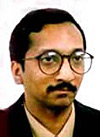
Charles Cooper

Charles Cooper is the founding director of the Maastricht-based United Nations University Institute for New Technologies, UNU-INTECH (now UNU-MERIT). In 1985, the Dutch Government asked him to prepare a feasibility study on the creation of a UNU Institute specializing in the social and economics aspects of new technologies. The report was presented to UNU in 1987 and was to form the basis for setting up the new Institute in 1990. At that time he was a professorial fellow at the Institute of Social Studies, The Hague, and had established a world-wide reputation in a long career that began at the OECD in the 1960s. Between July 1969 and July 1981 he was based at SPRU and the Institute of Development Studies, both at the University of Sussex, UK.

Charles Cooper served as UNU-INTECH director from 1990 to 2000. Under his leadership the Institute expanded rapidly to become the second largest UNU research and training centre. One of his flagship programmes was the establishment of the Institute's unique PhD programme in the Economics of Technological change in 1995, in close cooperation with MERIT (at the University of Maastricht ). This sowed the seeds for the integration of the two Institutes a decade later, to form UNU-MERIT.

In recognition of his immense contribution to our understanding of the role of technology in economic development - and the pivotal role he played in forging close ties between UNU-INTECH and MERIT, UNU-MERIT launched the Charles Cooper Memorial Lecture Series in January 2007. The lecture series will contribute to better public understanding of science, technology and innovation in the development process.


Charles Cooper and Amilcar Herrera

The Charles Cooper lecture series continues the tradition of the Amilcar Herrera public lectures at UNU-Institute for New Technologies. They pay tribute to an entire generation of economists who, dissatisfied with the analysis of technology in mainstream economics, began to develop alternative theories of the role played by technology in development.  All contemporaries and close colleagues of Amilcar Herrera, they included Charles Cooper, Christopher Freeman, Francisco Sercovich, Frances Stewart, Constantine Vaitsos, Sanjaya Lall, Linsu Kim, and Miguel Wionczek.

Many of these great thinkers collaborated in the now classic 1973 book: Science, Technology and Development, edited by Charles Cooper, in which Amilcar Herrera contributed a chapter titled “Social Determinants of Science Policy in Latin America: Explicit Science Policy and Implicit Science Policy.” Some of these scholars were also intimately associated with the UNU Research and Training Institute that Cooper set up in Maastricht in 1990.


Past Lectures

Charles Cooper Lectures
2008, Playing in invisible markets: Innovating to harness the power of the poor by Shyama V. Ramani
2007, The Challenge of the Asian Drivers: From Industrial to Innovation Policy by Raphie Kaplinsky

Amilcar Herrera Lectures  
2005, Climate Change: A Political Quagmire? by Eugene Skolnikoff
2004, The role of New Technologies in Achieving the UN Millenium Development Goals by M S Swaminathan
2002, Sources of Innovation in Developing Economies: Reflections on the Asian Experience by Nathan Rosenberg,
2001, Technological Revolutions and Opportunities for Development as a Moving Target  by Carlota Perez


Tributes
 
"Charles Cooper made an important and early contribution to the debate on the role of science and technology in development at a time when the issues were rather obscure and far removed from mainstream thinking.
I first read his work while I was a student at SPRU. This focus on technology and development is reflected in his later analysis of technological dynamism in the context of a dual economic structure that drew from Arthur Lewis's theoretical formulation. His concern was about how developing countries adjust to the fast changing economic regimes brought about by new technologies. This is not surprising. The whole motivation for setting up the UNU-INTECH was to do precisely this."
Banji Oyelaran-Oyeyinka, Professorial Fellow, UNU-MERIT
 
"In 1973 Charles Cooper edited and wrote the introductory chapter of a book entitled Science, Technology and Development: The Political Economy of Technical Advance in Underdeveloped Countries (Frank Cass). The book contained contributions from distinguished scholars like Amilcar Herrera and
Frances Stewart. This was the first collection of work I had ever come across that analysed issues of development, technological innovation and government policy from a developing country perspective. This book had an enormous impact on young professionals in developing countries - some (like me) were attracted to the field of Science and Technology Policy after reading this book."
Léa Velho, Senior Researcher, UNU-INTECH (2002-2005)
     
"Charles Cooper was an important development economist specialized in the study of issues related to technology and technical change in developing countries; he was also an institution builder..."
Sunil Mani, Researcher UNU-INTECH (1999-2004)

 
"My research career owes a lot to Charles Cooper. As I often told him, I seemed to have spent most of my time following in his footsteps as he moved from one research organization to the next..."
Luc Soete, Director UNU-MERIT
read full tribute
 
  © 2007 UNU-MERIT | webmaster